Math Games: Math for Kids
RV AppStudiosEducational
4.51.02K Reviews
- Version
- Varies With Device
- Installs
- 50.00M
- Age Rating
- Everyone
Screenshots
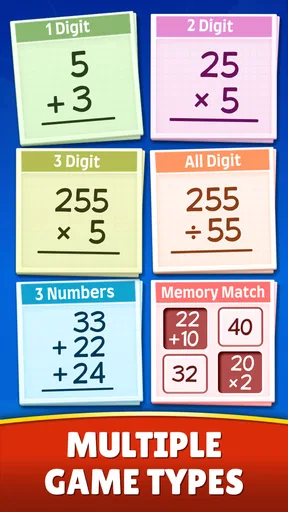
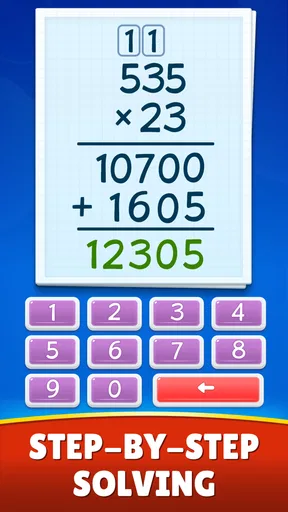
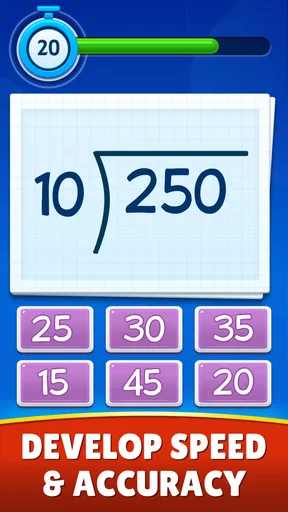
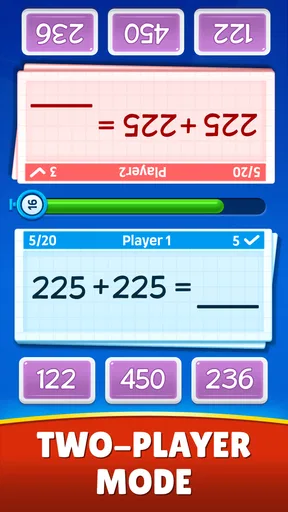
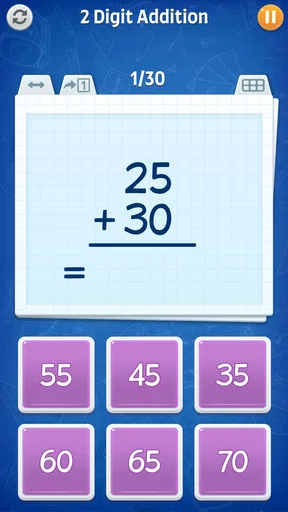
Our Review of Math Games: Math for Kids
 Analysis by Appyee
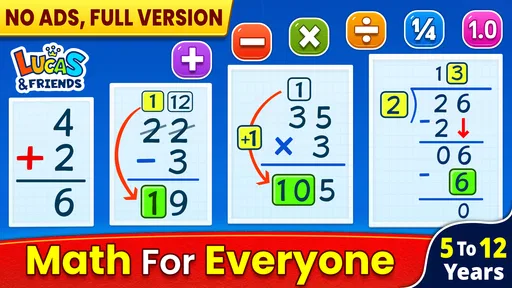
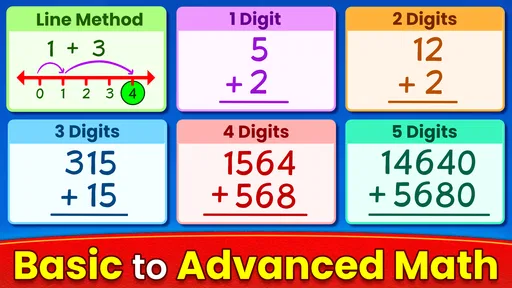
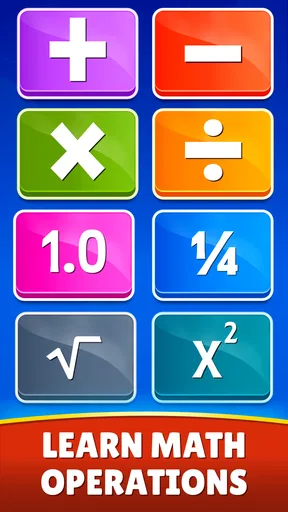
Math Games: Math for Kids is the kind of educational game I can imagine opening during a short break rather than scheduling as a formal lesson. It focuses on basic addition, subtraction, multiplication, and division, turning practice into small playable challenges that are easier to approach than a page of exercises. I reviewed it as a parent-friendly learning tool, and my overall impression is that its biggest strength is its simple purpose: it keeps children working with core arithmetic without surrounding the task with unnecessary complexity.
Developed by RV AppStudios, this free educational game is aimed at Everyone and runs on Android devices using version 6.0 or later. The current version is 2.1.2. Its broad reach is easy to understand: it has passed 50 million installs and holds a 4.4 average from around 72 thousand ratings, with roughly 1 thousand written reviews. Those figures do not replace hands-on judgment, but they do show that the format has found a large audience.
Why the first impression works for short learning sessions
My first impression was that the game is designed to reduce the hesitation children often feel before starting math practice. There is no need to prepare paper, gather flashcards, or decide which worksheet fits the moment. A child can move directly into arithmetic questions and begin responding. That immediacy matters when the available time is only a few minutes.
The presentation also suits its educational role. Rather than trying to make the game feel like a complicated adventure, it keeps the attention on answering problems. That restraint is useful for younger players who may become distracted by too many menus, characters, or side activities. The visual direction supports a friendly learning mood, while the playable structure gives each question a clear purpose.
I would particularly recommend trying it when a child is between activities. For example, after school, a parent could offer a short round before dinner instead of presenting math as another large assignment. The game is well suited to that situation because the child can practice one operation at a time and stop before the session becomes tiring. The important point is to treat it as a compact routine, not as a replacement for every form of mathematics learning.
The free price makes that trial easy. A family can see whether the style fits the child without committing money first. That is helpful when children have very different reactions to educational games: one may enjoy quick questions, while another may prefer building, drawing, or solving longer problems on paper.
A visual language that keeps the subject approachable
The art direction works best when it makes arithmetic feel less intimidating. Bright, accessible presentation can help a child associate practice with a playable activity instead of a test. In my experience, this matters most for children who already hesitate when they see a column of numbers. A game-like setting gives them a softer entry point.
At the same time, the visual layer does not appear to be the main attraction. That is a positive trade-off here. The game does not need an elaborate fictional world to justify its existence; its world is built around the act of learning. The setting creates a gentle frame for the questions, then gets out of the way so the child can concentrate.
This makes the experience more coherent than many educational products that add decoration without connecting it to the lesson. Here, the mood and the mechanics point in the same direction. The cheerful presentation invites the player in, while the arithmetic keeps the session focused. I would not choose it for a child looking for a deep story or a large exploratory map, but that is not the job this game is trying to do.
One useful way to use the visual structure is to let the child explain what operation they are practicing before starting. Asking, “Are we working on adding or multiplying now?” turns the opening screen into a small preparation step. It helps the child recognize that the game is not random entertainment and makes it easier for an adult to notice which skill needs attention.
Sound, feedback, and the rhythm of answering
Sound and immediate feedback are important in a game built from repeated questions. Each response needs to feel connected to an outcome, otherwise the activity can quickly become a dull sequence of numbers. The audio-visual rhythm gives the child a sense of movement: read the problem, choose or enter an answer, receive feedback, and continue.
I see that rhythm as one of the main reasons this format can compete with ordinary worksheets. A worksheet leaves the learner alone with the page until someone checks it. A game can respond right away, which helps a child notice mistakes while the question is still fresh. That does not guarantee understanding, but it creates a more active practice loop.
There is also a trade-off. Repeated sounds and quick feedback can encourage speed before accuracy. Some children start guessing because they enjoy keeping the sequence moving. I would therefore encourage an adult to ask the child to explain one or two answers after a round, especially when multiplication or division becomes less automatic. The game supplies repetition; conversation supplies the reasoning that repetition alone may not build.
For a quiet household, sound can also affect when the game is most comfortable to use. A child may enjoy the feedback during an afternoon session but need a quieter approach later in the evening. If the device’s audio becomes distracting, the game’s value should be judged by how well the child can still concentrate, not by how lively the session feels.
How the mechanics fit real arithmetic practice
The central mechanics are straightforward: the child practices addition, subtraction, multiplication, and division through game-like questions. That simplicity is exactly why the app can be useful for early learners. The operations are familiar, but familiarity does not mean mastery. Regular short practice can help build recall, especially when a child understands the method but takes a long time to produce an answer.
I would use addition and subtraction first to establish confidence. These operations are often where children learn to connect symbols with quantities and mental strategies. Once the child is comfortable, multiplication and division can be introduced as related ideas rather than isolated facts. A parent can ask the child to connect a multiplication answer to a division question, turning two separate game categories into one larger mathematical relationship.
That is one of the more useful ways to get extra value from the app: do not let the child treat every question as a single disconnected target. If the game presents a multiplication problem, follow it with a real-world prompt such as grouping snacks or arranging toys in equal rows. The game handles quick practice, while the household example helps transfer the skill beyond the screen.
The pacing is best for repetition, not deep explanation. If a child repeatedly misses the same type of question, simply playing more rounds may not solve the problem. I would pause and work through the idea with objects, drawings, or spoken steps, then return to the game for another attempt. In that workflow, the app becomes a practice partner rather than the entire teaching method.
Where it fits beside worksheets and other math games
Compared with a worksheet, Math Games: Math for Kids is more responsive and easier to start. It gives the child a playable rhythm and makes short practice less dependent on an adult preparing material. A worksheet still has advantages when a teacher or parent wants to see the child’s written method, handwriting, layout, or detailed reasoning. I would use both rather than treating them as competitors.
Compared with a broad learning platform, this game is more focused. A larger platform may offer reading, science, stories, or structured lessons across several subjects. That wider scope can be better for families wanting one central learning environment. This app makes more sense when the immediate need is arithmetic practice and the child benefits from a smaller, clearer activity.
Compared with a purely competitive math game, its educational identity feels more important than winning. That can be helpful for children who become anxious when they are placed under time pressure or compared with others. On the other hand, a child who needs a strong narrative, character progression, or a rich reward system may find the experience limited after the initial novelty fades.
The game is also not the right choice for every learner. A child who needs detailed explanations after each mistake may need a teacher-led app or an adult beside them. A student already working on algebra, geometry, fractions, or multi-step word problems will likely outgrow this focus. The four operations are valuable foundations, but they do not cover the full range of school mathematics.
Practical routines that make the game more effective
I would keep sessions short enough that the child finishes feeling capable rather than exhausted. The exact length should depend on attention and confidence, but the principle is simple: stop while practice still feels manageable. A brief daily routine can be more useful than a long session that turns the game into a punishment.
Another effective routine is to choose one operation as the main target and use the others for variety. For example, a child struggling with division can spend most of the session on division, then answer a few addition or multiplication questions to finish with familiar material. This prevents the difficult skill from dominating the emotional tone of the whole session.
I also recommend watching the type of mistake, not only the score. A child may answer subtraction questions incorrectly because they rush, misunderstand place value, or lose track when borrowing is involved. The game can reveal that a problem exists, but an adult needs to identify why. That distinction is important: more rounds help recall, while a different explanation helps repair confusion.
For independent use, the game is most suitable when the child already knows how to read the questions and can handle basic device navigation. Younger children may still need help at the beginning, particularly when they are learning how to select an answer carefully instead of tapping quickly. Once the routine is familiar, the app can provide useful solo practice, but occasional check-ins keep it from becoming mindless guessing.
What families should know before installing
The age rating of Everyone makes the game a natural candidate for family devices and early learners. I would still introduce it according to the child’s ability rather than age alone. Some children will be ready for multiplication practice early, while others will benefit from spending more time building confidence with addition and subtraction.
It is compatible with Android 6.0 and newer, which gives it a broad technical reach on older supported devices. That is convenient for families using a hand-me-down phone or tablet for learning. The free model also removes one common barrier to testing an educational tool, although parents should still consider whether the child enjoys the question-and-answer format before making it part of a regular routine.
The developer, RV AppStudios, has kept the concept recognizable and accessible. The large install base suggests that the game is easy for many families to discover, while the 4.4 average indicates generally positive reception. I would interpret that as encouragement to try it, not as proof that it will suit every learning style. The best test is whether the child answers thoughtfully and returns willingly without needing constant pressure.
One question parents often have is whether the game can replace tutoring or schoolwork. In my view, it should not. It is strongest as reinforcement: a way to repeat core operations, build fluency, and make a spare moment productive. It is much less suitable as the only explanation for a new concept or as a complete mathematics curriculum.
Another practical question is whether it works for children who dislike math. It can help when the dislike comes from worksheets feeling heavy or from a fear of being wrong in front of others. The game offers a more private, playful entry point. But if the child dislikes timed repetition itself, the format may not change that reaction. In that case, manipulatives, stories, or collaborative puzzles could be a better first step.
My final question would be whether older children should use it. They can, but only if the operation practice still matches their needs. The game is most valuable when a learner is strengthening foundational arithmetic, not when they are looking for advanced challenges. Choosing the right level matters more than simply increasing the number of rounds.
The atmosphere verdict: focused, friendly, and intentionally modest
Math Games: Math for Kids creates a coherent playable mood by combining approachable art direction, responsive feedback, and a steady arithmetic rhythm. Nothing about the experience needs to compete with a large adventure game. Its atmosphere is built around making practice feel less formal and more inviting, while the mechanics remain clear enough for a child to understand what they are learning.
My recommendation is strongest for families wanting a free, focused way to rehearse addition, subtraction, multiplication, and division. It is especially useful for short sessions, confidence building, and keeping basic facts active between lessons. I would pair it with conversation, objects, written work, or teacher guidance whenever a child is making repeated mistakes.
The limitations are equally clear: it is not a deep curriculum, it may not satisfy children who need rich stories or advanced mathematics, and quick feedback can encourage guessing if nobody discusses the reasoning. Those are manageable weaknesses when the game is used for its proper role.
Overall, I would recommend installing it if your child needs approachable arithmetic practice and enjoys answering questions in a game-like setting. The best results come from treating it as a small daily tool: choose a target operation, encourage careful answers, talk through mistakes, and stop before frustration takes over. Used that way, this modest educational game can make the routine of learning basic math feel noticeably more playable.
Privacy and Permissions
See what permissions an app requests and how it handles your data.
- Wi-Fi connection information
- view Wi-Fi connections
- Other
- view network connections, full network access, run at startup, control vibration, Google Play license check
Verdict
Strengths of Math Games: Math for Kids
- Covers addition, subtraction, multiplication, and division practice.
- Short challenges help children stay focused without feeling overwhelmed.
- Immediate answers make it easy to spot and correct mistakes.
- Suitable for independent practice at home or during travel.
- Bright visuals make basic math exercises more appealing to young learners.
Limitations of Math Games: Math for Kids
- Difficulty may feel limited for children who already know the basics.
- Repeated question formats can become predictable over time.
- Some features may require an internet connection or paid access.
- Ads or upgrade prompts could distract younger players.
- Parents may need to check settings and progress reports regularly.
Other Releases by RV AppStudios
View All
Coloring Games: Color & Paint
Educational4.4

Drawing Games: Draw & Color
Educational4.3

Baby Games: Piano & Baby Phone
Educational4.4

Puzzle Kids: Jigsaw Puzzles
Educational4.4
Similar Picks in This Category
View All
Little Panda Policeman
BabyBus4.0

Monster Trucks Game for Kids 2
Raz Games4.1

Little Panda's Chinese Recipes
BabyBus4.4

Little Panda's Restaurant
BabyBus4.4

Little Panda's Ice Cream Games
BabyBus4.3

Baby Panda Care
BabyBus3.8
Frequently Asked Questions
What is Math Games: Math for Kids?
Math Games: Math for Kids is an educational app designed to help young learners practice basic mathematics through interactive exercises and game-like challenges. It generally focuses on skills such as addition, subtraction, multiplication, division, number recognition, and simple problem-solving. The playful format can make practice feel less like homework, although parents should review the available topics to confirm that they match their child’s age and current school level.
Is Math Games: Math for Kids suitable for my child’s age?
The app is mainly intended for children who are learning elementary mathematics, but the ideal age depends on the child’s existing skills and the difficulty levels available in the current version. Younger children may need help reading instructions or navigating menus, while older children can use it for quick revision. Before downloading, check the store listing for the recommended age range and supported learning stages.
Does Math Games: Math for Kids work without an internet connection?
Some math activities may be available offline after installation, which is useful for travel, school breaks, or limiting screen-time distractions caused by online content. However, features such as advertisements, progress synchronization, updates, or additional content may require an internet connection. Availability can differ between Android and iOS versions, so it is best to test the app in offline mode and review its store description before relying on it without Wi-Fi or mobile data.
Is Math Games: Math for Kids free to download and use?
The app may be free to install, but free versions of children’s educational games can include advertisements, locked activities, optional purchases, or subscription features. Parents should examine the in-app purchase section carefully before allowing a child to play independently. It is also worth checking whether the free content is sufficient for regular practice, because some important lessons, difficulty levels, or customization options may only be accessible after payment.
Does the app collect personal information or show advertisements to children?
Because this is a children-focused app, parents should read the privacy policy, age rating, and data-safety information before installation. Depending on the version and region, the app may use advertising, analytics, or optional account features. Check whether ads can be removed, whether purchases require parental approval, and what information is collected. Supervision is recommended, particularly if the device is shared or connected to a family payment account.
Play our best games!


